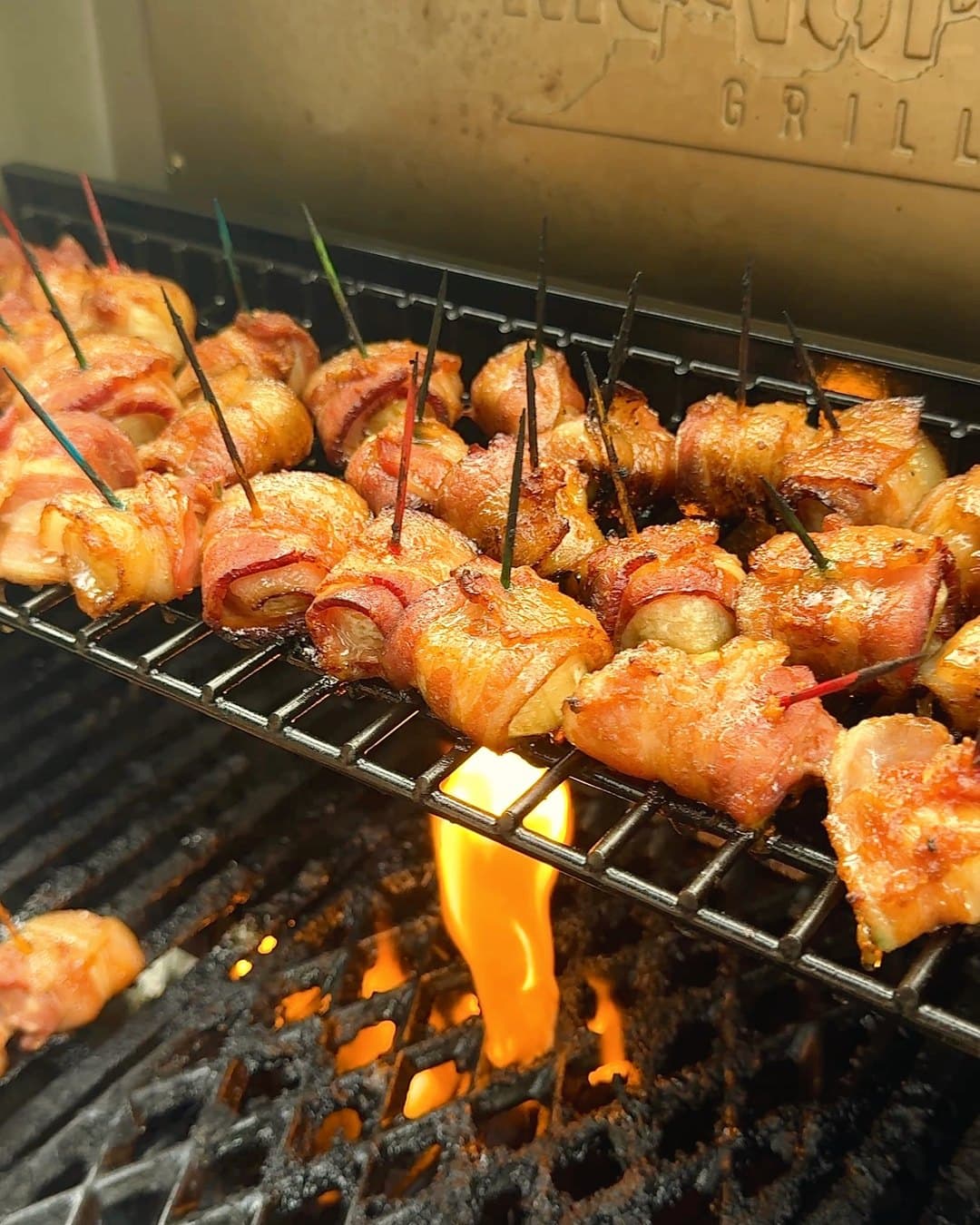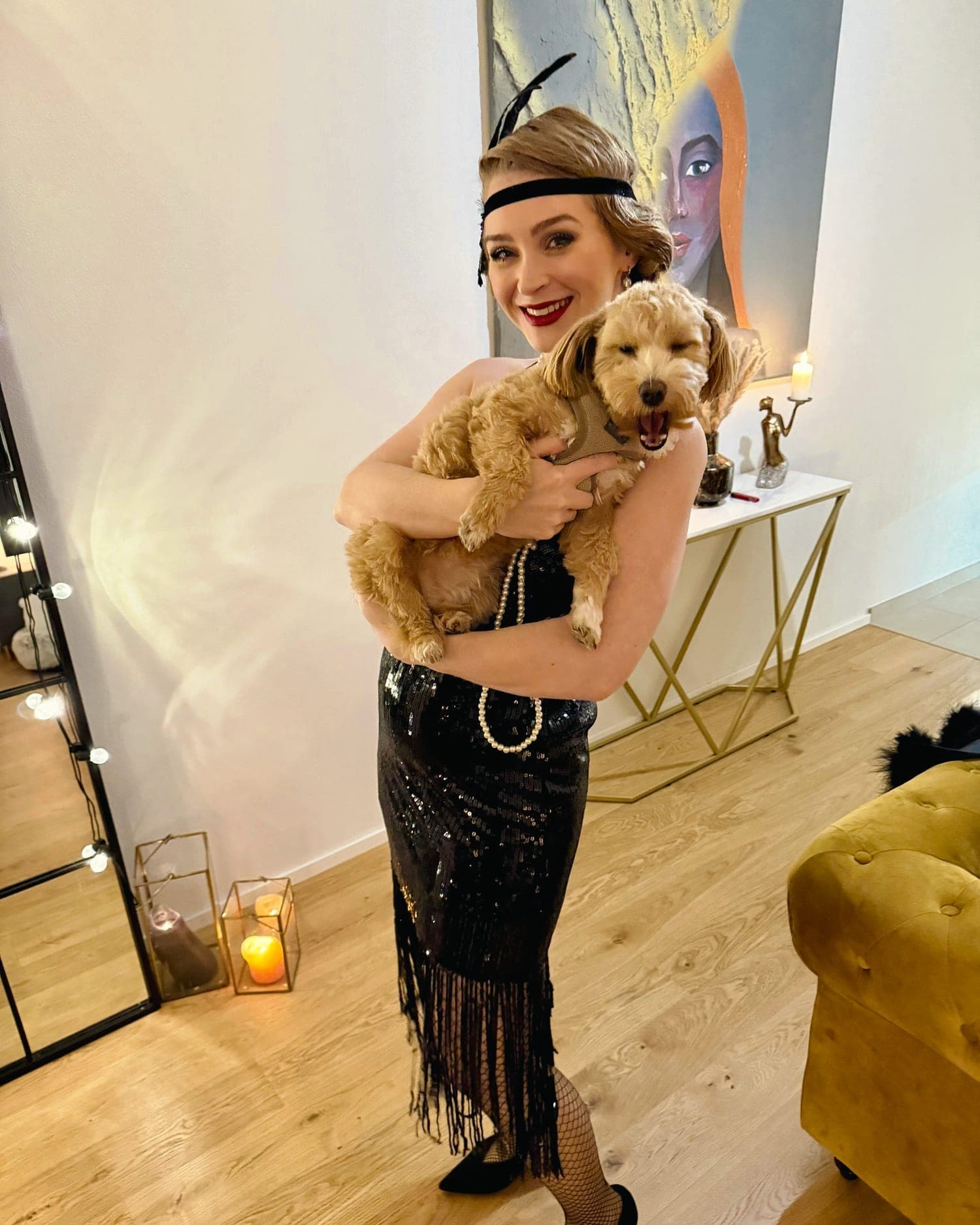
Once, for New Year's Eve, I turned my apartment into a speakeasy. I've been to plenty of speakeasies and I know the vibe, but I still did my due diligence, because a theme only works if you commit to it all the way.
Here is the part most people outside America don't know. Speakeasies come from Prohibition. From 1920 to 1933, the United States banned the making, selling, and moving of alcohol, so the drinking went underground into hidden bars you entered through an unmarked door, usually with a password. That is where the name comes from. You spoke quietly, or easy, to be let in. All the secrecy, the passwords, the doors that don't look like doors, was real, and it's the part I built the night around. I called mine the 1926 Secret Social.
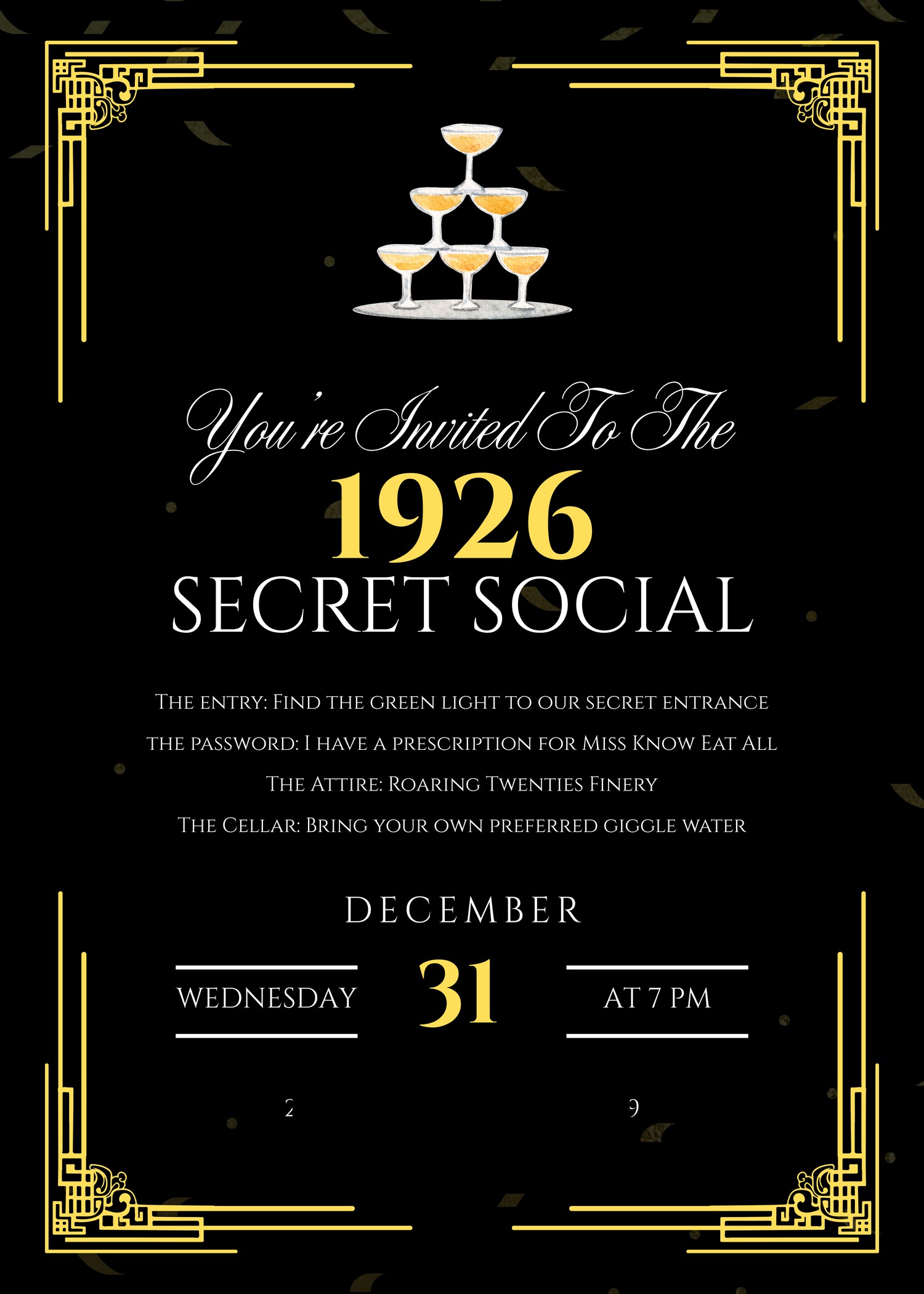
The Invite
The invite does the first bit of work. I designed mine digital, in full Art Deco, full of 1920s slang, and it carried everything a guest needed to play along:
- the dress code
- the location, on the same card
- a password they had to memorise to get in
If you're going to run a secret door, the secrecy has to start on the invitation.
The Entry
This was the unnecessary thing I did completely, and it's the one I'll tell you not to skip. Guests were told to avoid the main door and look for a green light. I tracked down a portable lion-head doorknob, set up the green light at a side door, and made everyone give the password to come in. It's theatre, and that's the entire point. It was so funny, and people loved it. The second someone whispered the password, they weren't a guest anymore. They were a character in the night.
The Dress Code
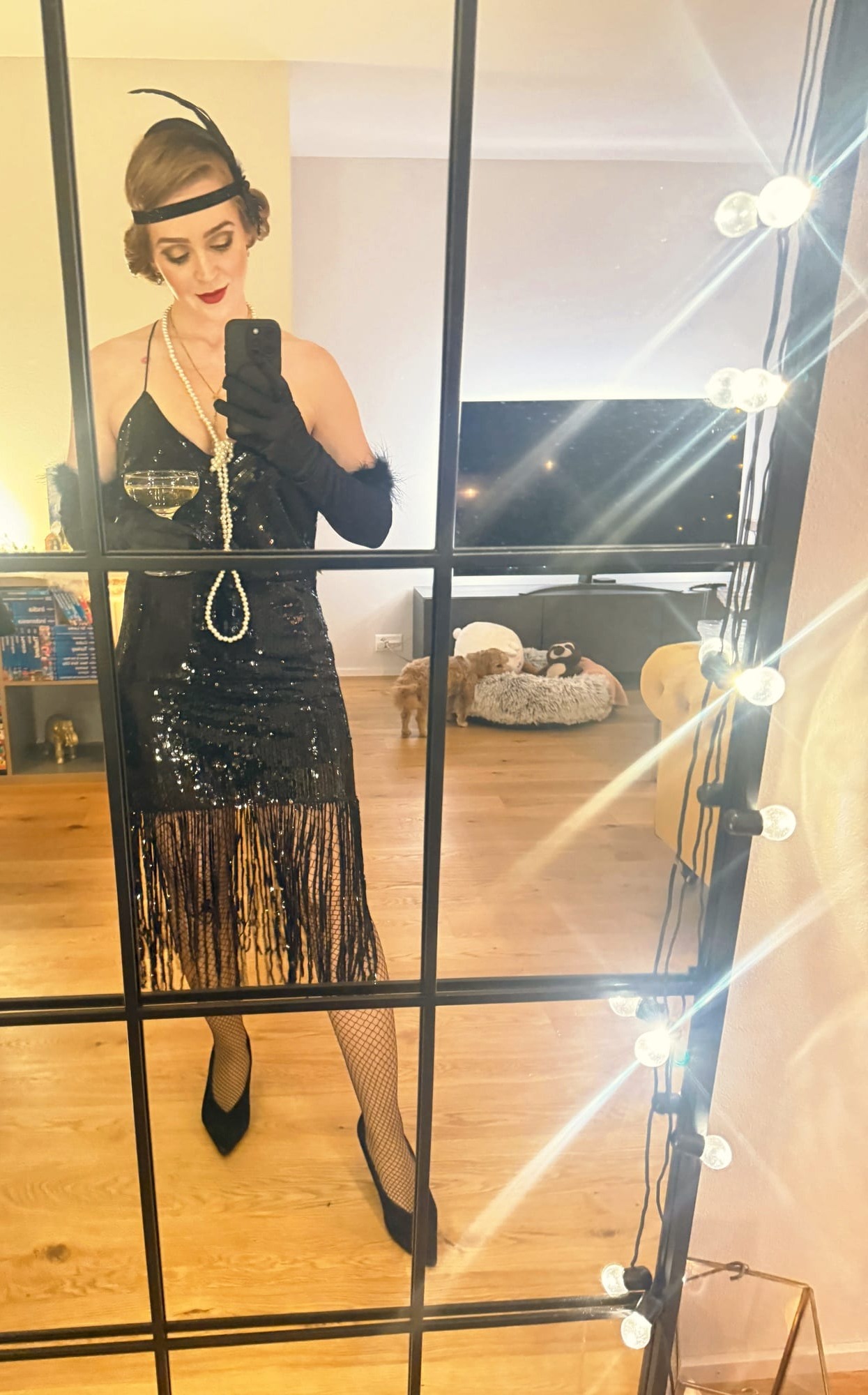
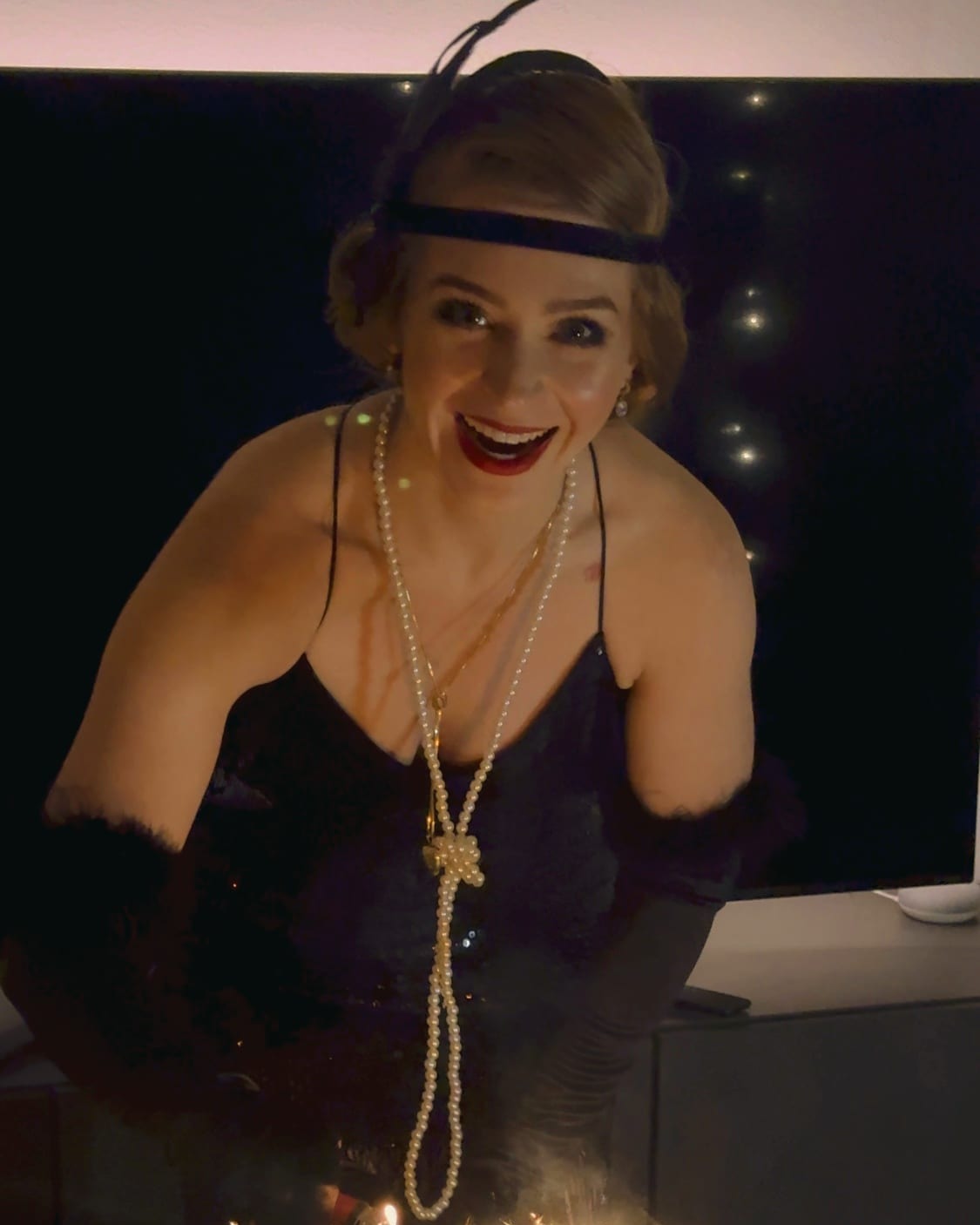
Roaring Twenties finery, dressed to the nines. It was New Year's Eve, so I wanted it glamorous. Everyone committed, and the commitment is what made the room, because we all looked like we'd stepped out of a Great Gatsby party. Think pearls, headbands, sequins, fishnets, and a fan for the hand.
The Cellar
Drinks lived in the cellar, which is to say the bar. A grand champagne tower to open, because nothing is more Roaring Twenties than a champagne tower, and then my two signature cocktails: the Dark Muse, an espresso martini, and the Smoked Oak, a smoked old fashioned, both named to match the night. House spirits were provided, plus a few improper ones, and guests were told to bring their own giggle water too. That last part is also a quiet way to get people to contribute to the evening without putting any pressure on them.
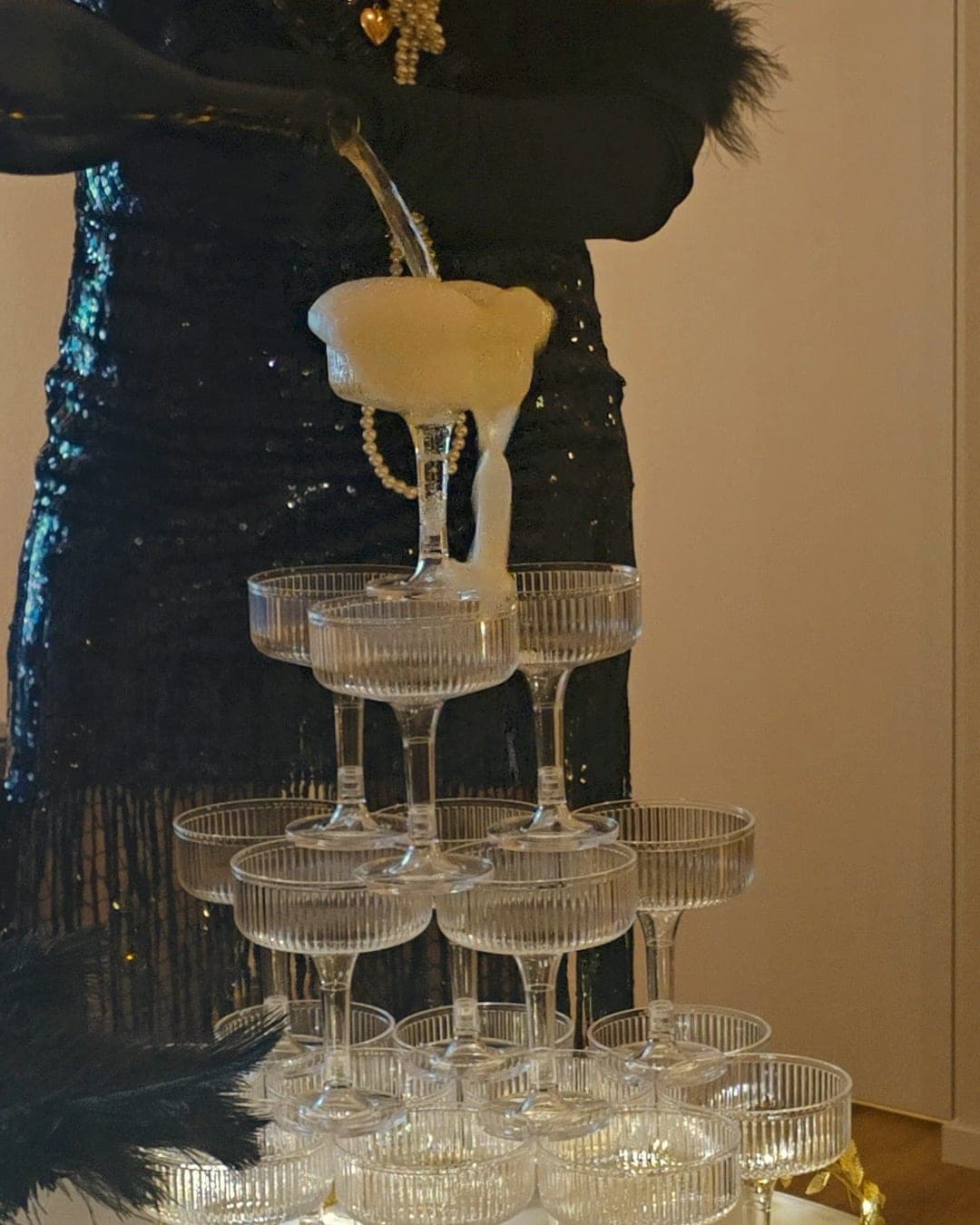
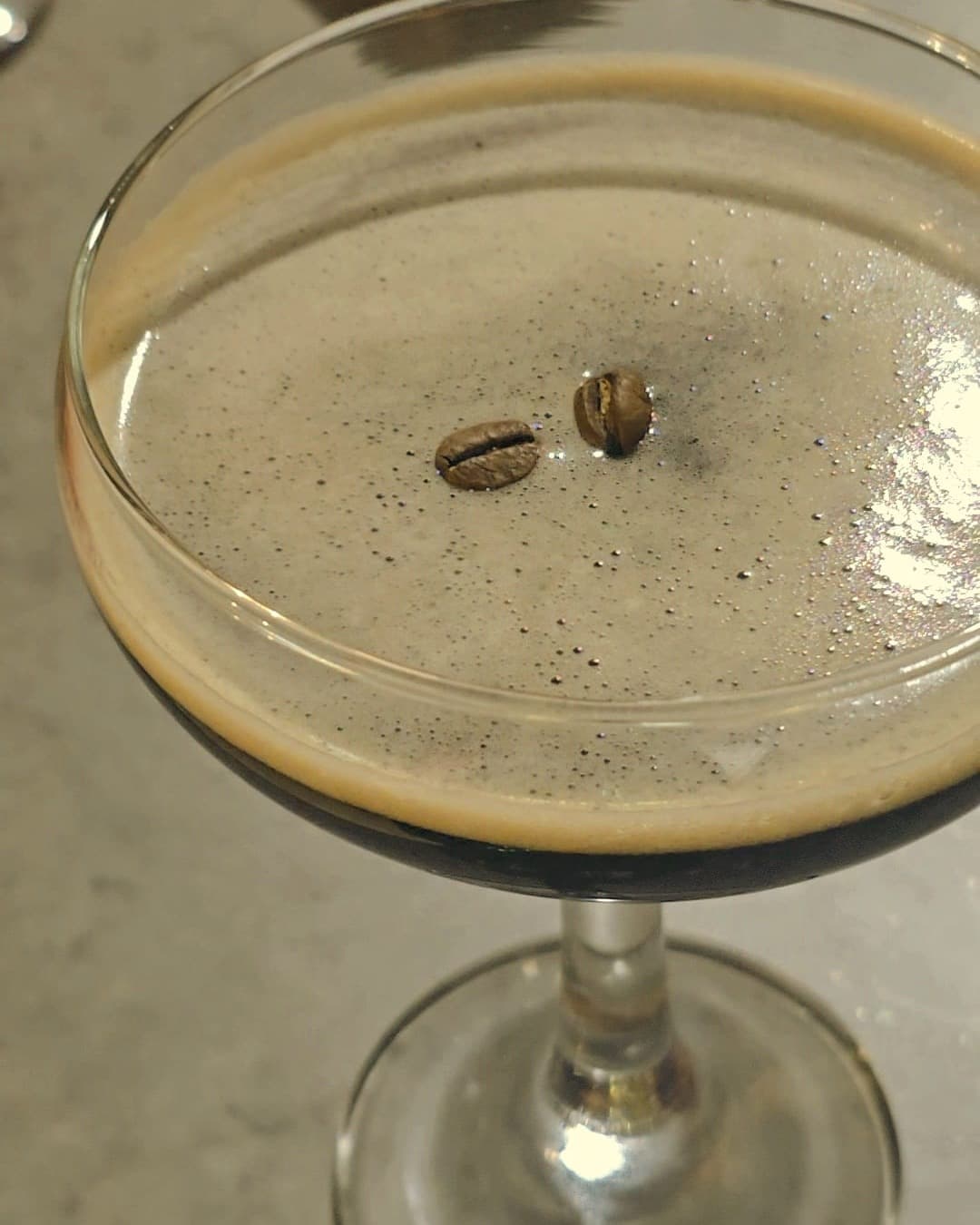
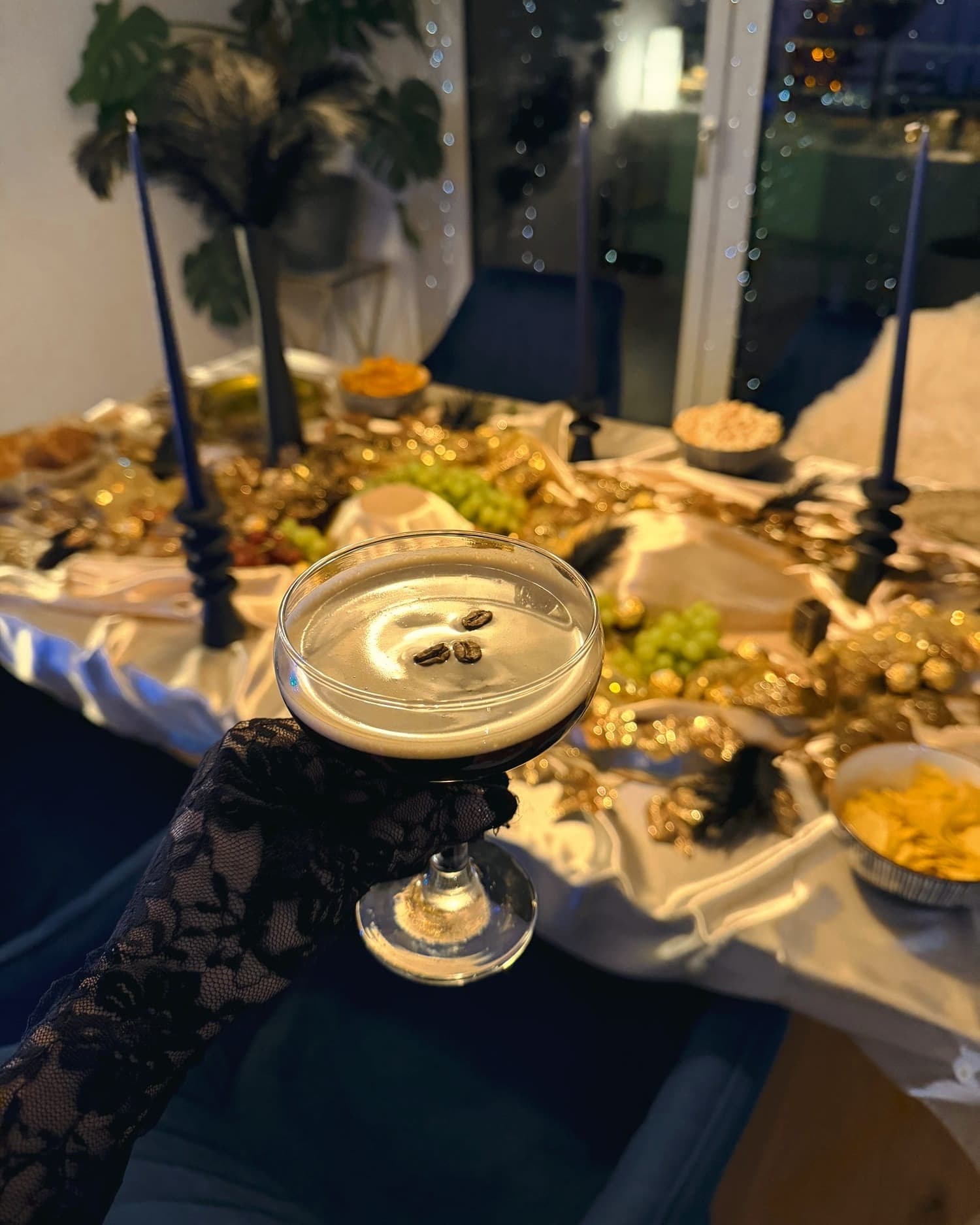
Swipe or scroll for more
The Provisions
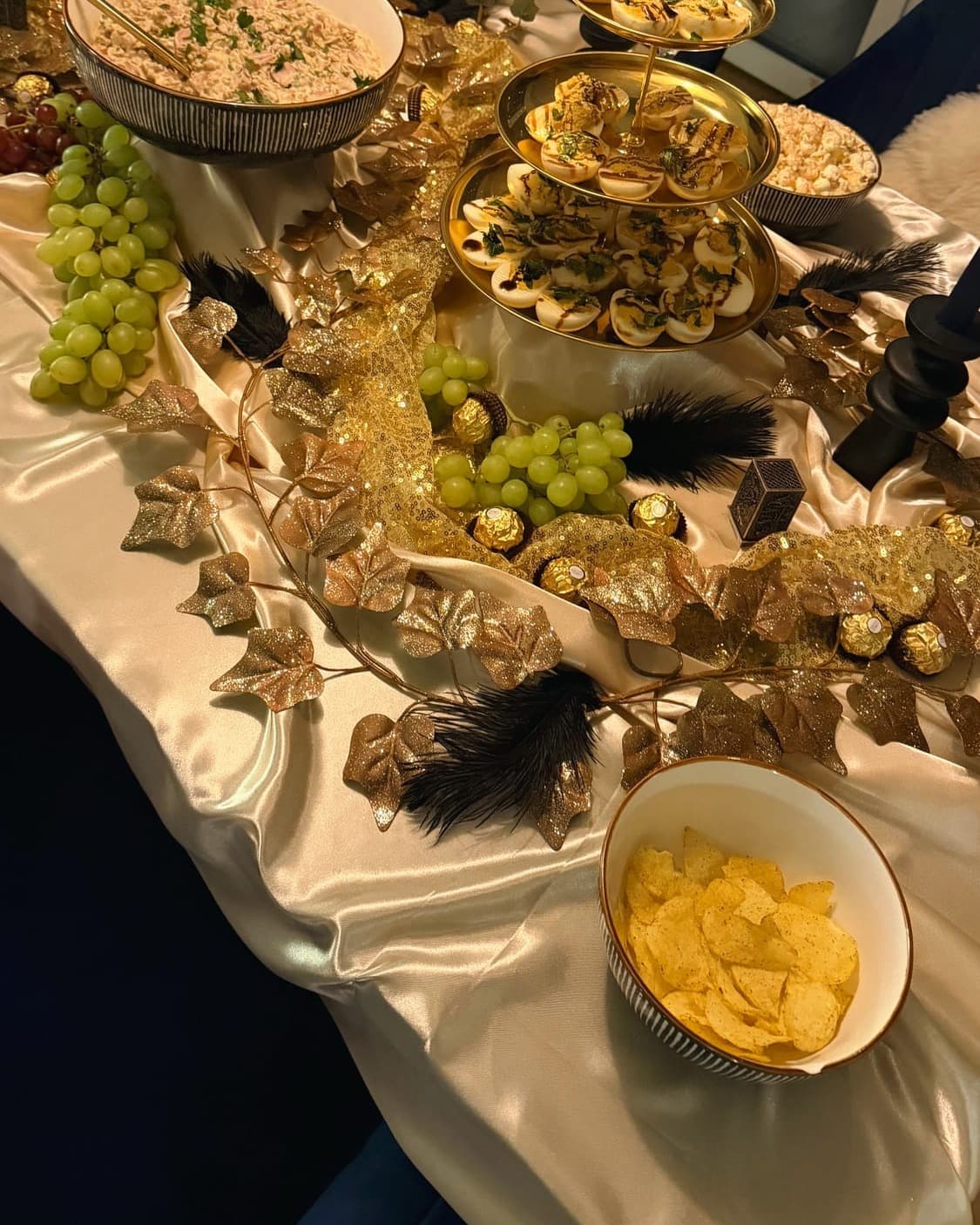
I leaned gold to match the room, which mostly meant edible glitter on almost everything:
- golden deviled eggs, a Roaring Twenties classic
- gold-dusted popcorn
- golden jello bites
The one with meaning was a Hungarian lentil salad, which we eat for good luck in the new year. It fit better than I expected, because mayonnaise-dressed salads like the Waldorf and the Russian salad were everywhere in the Twenties, so a lucky lentil salad in a period sour cream and mayonnaise dressing was right at home.
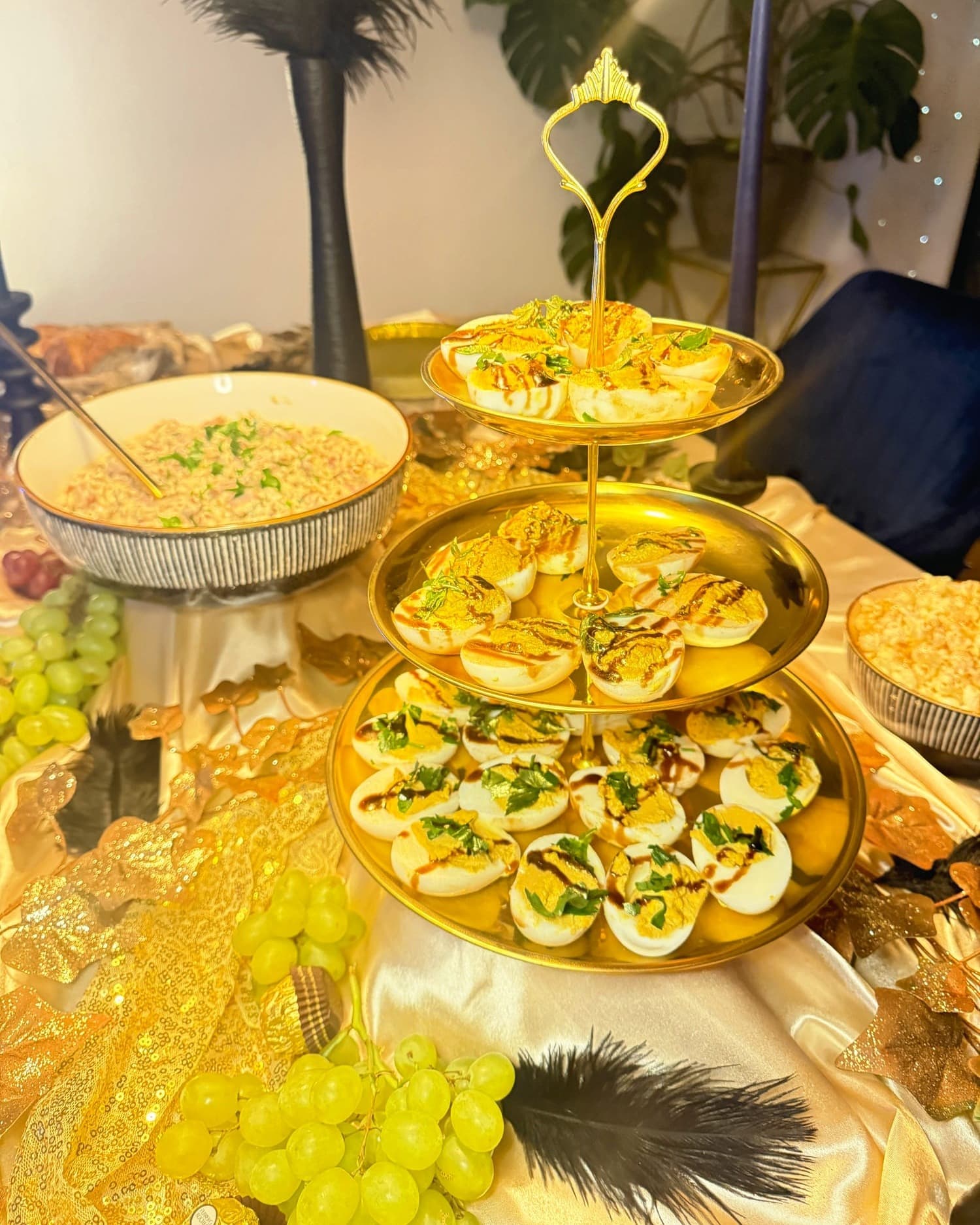
Swipe or scroll for more
The Cake
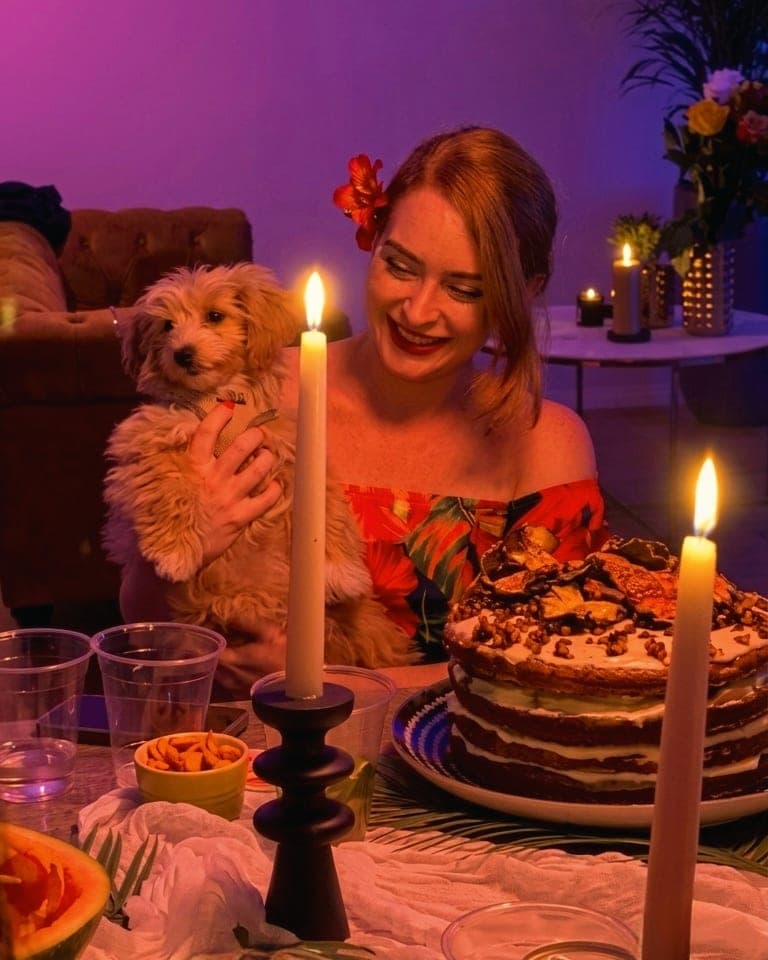
Dessert was a Sacher cake, with sparklers and, of course, more edible glitter.
The Mood
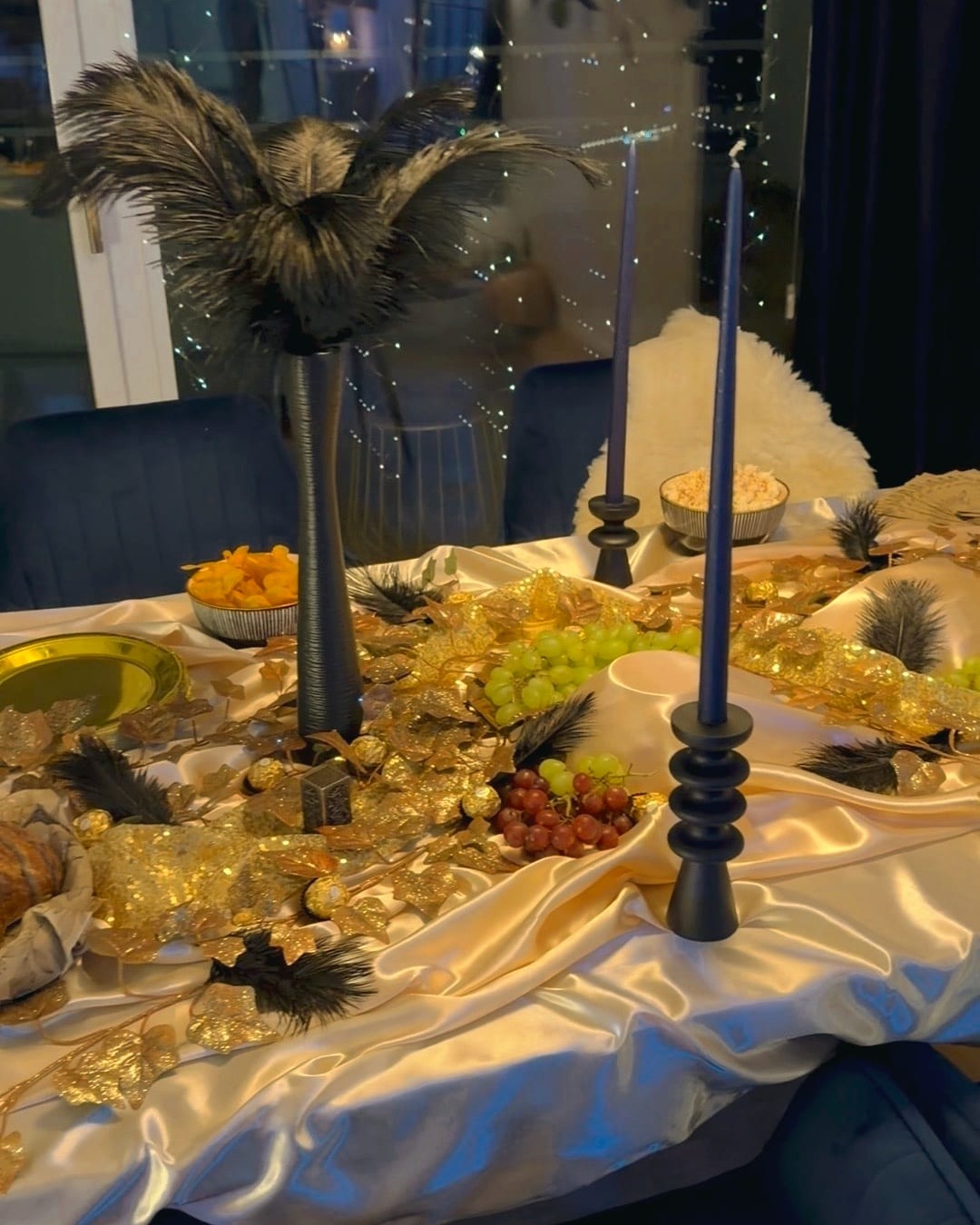
This is where a theme lives or dies. Gold tinsel and dim lamps for a low, moody light. Incense, so the apartment smelled of wood and smoke, which is what a speakeasy should smell like. A monochromatic gold tablescape with shimmering sequin runners and black ostrich feathers, and a 2026 photo wall in one corner, because it was still New Year's Eve and someone always wants the picture.
The lighting did most of the work. I have adjustable smart lights, which are the single best asset I own for a theme party. This time I dimmed them right down and pushed the colour dark, and that alone turned the room into an illicit little lounge. If you want to turn your apartment into different moods with no effort, this is the easiest way, and I recommend it a hundred percent.
What I'd Do Differently
I'd start planning months ahead. In Switzerland people are booked out weeks, sometimes months, in advance, and New Year's Eve is the worst of all for it. I was travelling in the run-up and left the invitations late, and I ended up with fewer guests than I wanted. That one is on me.
The other thing worth knowing is specific to theme parties. A dress code can quietly cost you guests. Some people don't want to dress up, or decide they have nothing to wear, or get the invite too late to sort it out, and any of those can turn into a no-show. So I always frame the dress code as a nice-to-have, never a requirement. People commit far more happily when they don't feel ordered to.